- All
- Product Name
- Product Keyword
- Product Model
- Product Summary
- Product Description
- Multi Field Search
 English
Views: 0 Author: Site Editor Publish Time: 2026-08-15 Origin: Site


In scenarios of cargo pallet strapping and heavy‑duty goods packaging, PET steel‑like strapping bands have gradually replaced traditional steel straps and become a mainstream choice for logistics packaging. However, strapping bands available on the market vary greatly in thickness, purity and recycled‑material ratio. Many enterprises are prone to pitfalls during procurement, resulting in problems such as breakage, spring‑back, slipping and non‑compliance with new export regulations. This article provides a comprehensive guide to PET steel‑like strapping bands, helping you understand their properties, select proper applications and avoid procurement traps, together with practical quality‑inspection methods to distinguish good‑quality products from defective ones at a glance.
PET steel‑like strapping bands feature high tensile strength, with tension close to that of steel straps. With moderate ductility, they can buffer impact force when goods jolt during transportation and are not easy to snap, making them suitable for long‑term strapping of heavy‑weight cargo.
Compared with iron steel straps, broken PET strapping bands will not fly off at high speed and cause injuries. Their smooth‑cut edges will not scratch workers, cartons or the surfaces of metal profiles during handling.
Unlike steel straps, they will not rust when exposed to water or leave rust stains contaminating products, which makes them ideal for goods stored in humid warehouses or exported via long‑distance container sea transportation.
Under specifications of equal tensile strength, PET strapping bands are lighter in self‑weight, and their per‑meter procurement cost is far lower than steel straps. Compatible with fully‑automatic and electric strapping equipment, they greatly cut down the time spent on manual strapping.
Made of single‑component PET plastic, they can be recycled and remanufactured. Qualified recycled PET strapping bands meet the recycled‑content requirements of the EU PPWR, and are the preferred packaging consumable for foreign‑trade export enterprises.
⚠️ Inherent Limitations of the Product
Ordinary high‑temperature resistance: Tensile force will decline if stored in a long‑term high‑temperature environment;
Virgin PET is not UV‑resistant: It will age rapidly, turn brittle and break easily under prolonged outdoor sun exposure;
Inferior strapping bands filled with excessive waste materials and miscellaneous recycled materials will suffer a sharp drop in toughness and tensile strength.
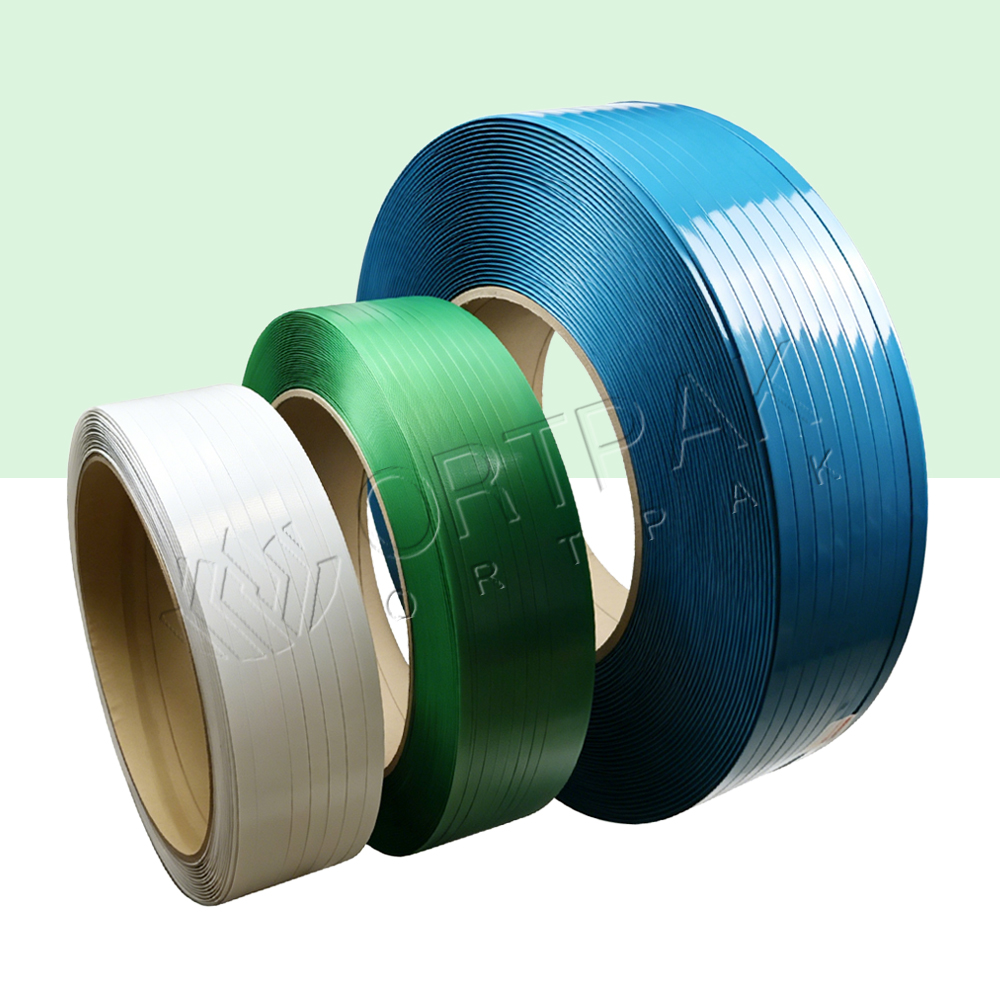
High‑quality high‑IV virgin / qualified recycled PET: Uniform and translucent color, clear and glossy green straps without cloudy whitening, a large number of black spots or grey‑black impurities; smooth strap body, burr‑free cuts on both sides and consistent thickness.
Inferior strapping bands filled with fillers: Overall cloudy and grey, covered with black recycled impurity particles, uneven strap surface and severely frayed edges, which are highly likely to scratch strapping machines and cause strap jams during operation.
Fold a section of strapping band repeatedly for more than 10 times:
Good‑quality PET strap: Only slight whitening at the bend without direct breakage, and good spring‑back performance;
Inferior strap mixed with miscellaneous waste materials: Cracks or breaks into two pieces after 2‑3 folds, and the strap may snap and cargo scatter under slight extrusion during transportation.
Pull both ends of the strapping band hard with both hands:
High‑quality strapping band: Can be stretched to a certain length and rebound slowly after release instead of breaking instantly;
Waste‑material‑based strapping band: Hardly stretchable and breaks with slight force, with its nominal tensile strength completely falsified.
Cut a small section and ignite it with an open flame for observation:
Pure high‑viscosity PET material: Yellow flame, transparent and long‑drawable molten filaments dripping during combustion with no pungent foul odor;
Straps heavily mixed with PP, calcium powder and miscellaneous recycled materials: Black smoke during combustion, dripping hard lumps without filaments, accompanied by a pungent plastic odor, which intensifies with higher impurity filling content.
Measure width and thickness with a caliper. Many low‑cost merchants falsely label dimensions: a strap marked 16 mm×0.8 mm may actually measure less than 15 mm in width and only 0.6 mm in thickness, leading to drastically reduced tensile strength. Imperial‑size specifications for foreign trade (3/8", 1‑1/4", etc.) need precise matching with equipment grooves; dimensional deviation will cause buckle‑locking slippage.
For conventional domestic procurement: Request tensile‑strength test reports;
For exports to the EU / overseas markets: SGS heavy‑metal test reports and recycled‑content certificates must be provided to confirm compliance with PPWR and REACH standards. Recycled strapping bands without formal third‑party test reports are very likely to contain miscellaneous recycled raw materials and excessive heavy metals, bringing risks of cargo detention during customs clearance.
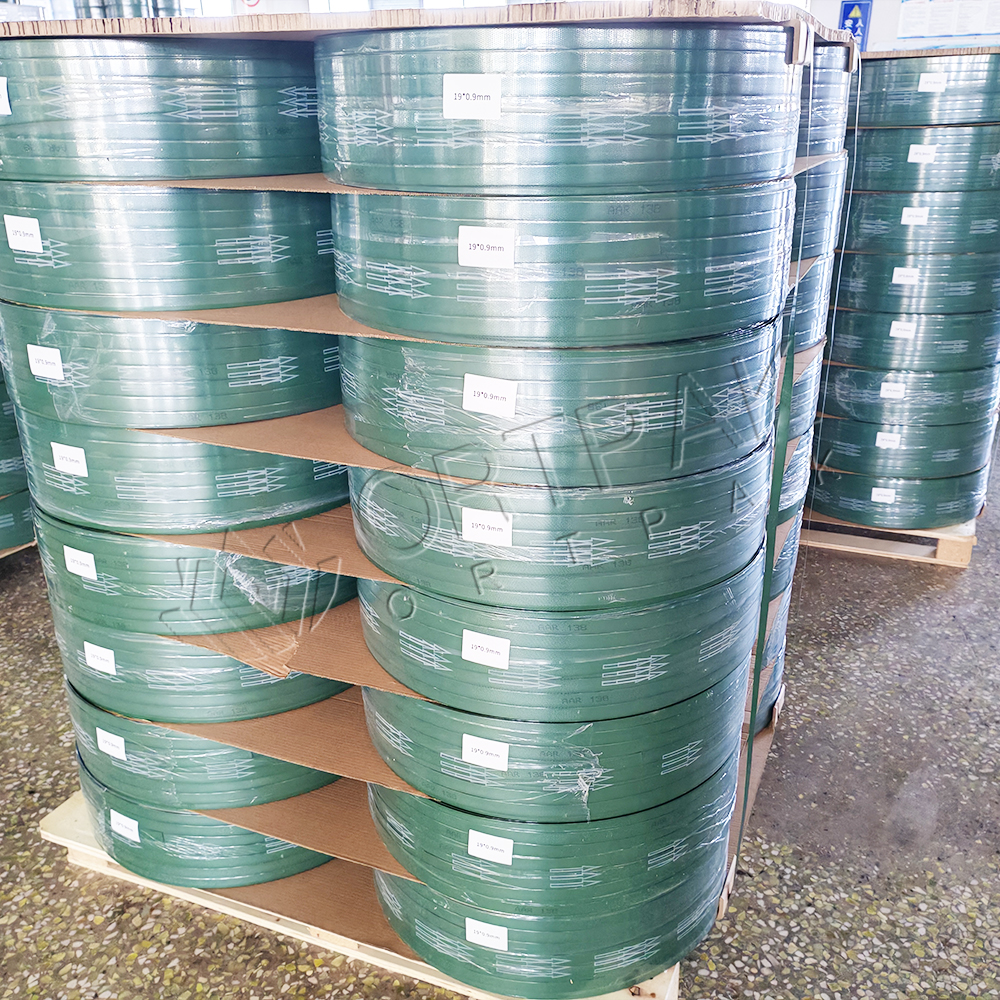
Many purchasers fall into the misconception that "thicker and wider means stronger". Strapping bands filled with large amounts of calcium powder and waste plastics may meet dimensional standards yet have seriously overstated tensile performance.
✅ Solution: Prioritize measured tensile‑strength reports as the core selection criterion, instead of judging load‑bearing capacity merely by appearance specifications.
100 % virgin material delivers stable tensile strength, yet the new EU PPWR regulation mandates a minimum recycled‑material proportion for plastic strapping bands. Long‑term exports to the EU relying solely on virgin material will become non‑compliant in the future.
Unbranded miscellaneous recycled straps without traceable sources often contain mixed recycled feedstock with high risks of heavy‑metal excess, which may result in cargo detention and fines during overseas customs clearance.
✅ Solution: Select compliant recycled PET strapping bands for EU exports, and keep complete SGS heavy‑metal and recycled‑content test documents in advance.
Fully‑automatic strapping machines impose strict requirements on strap flatness, IV viscosity and balanced hardness‑softness. Cheap hand‑use strapping bands with uneven thickness and frayed edges will continuously jam the machine and cause strap‑feeding failures, halting the whole production line.
✅ Solution: Procure dedicated PET strapping bands for fully‑automatic equipment for assembly‑line automated strapping; thickened hard‑type straps are available for portable heat‑welded strapping tools.
PET material is sensitive to high temperature and sunlight. Strapping bands stored outdoors in warehouses or stockpiled for more than six months will rapidly lose toughness and snap at the moment of strapping.
✅ Solution: Procure according to actual demand and follow the first‑in‑first‑out principle; store straps in cool, dry indoor areas completely shielded from direct sunlight.
Excessive deviation in the actual width of strapping bands will lead to insecure buckle engagement when paired with electric strapping machines or metal buckles, resulting in loose palletized cargo after jolting during logistics transportation.
✅ Solution: Test‑strap samples from each incoming batch on your equipment first, and confirm firm buckling and smooth strap‑feeding before large‑scale warehousing.
Low‑cost inferior strapping bands feature a high breakage rate, generating hidden costs such as goods rework, product collision damage, assembly‑line downtime maintenance and secondary manual strapping. The overall losses far exceed the price difference of the straps themselves.
✅ Solution: Calculate comprehensively the total cost consisting of "consumable unit price + strap‑breakage rework cost + equipment maintenance loss", and select suppliers with stable product quality and complete qualification certificates.
PET steel‑like strapping bands deliver a cost‑effective heavy‑cargo strapping solution, yet procurement decisions should never be based solely on price comparison and dimensional parameters. Before purchasing, you can quickly self‑test product quality via four simple methods: visual inspection, bending test, tensile test and combustion test. Domestic‑market‑oriented enterprises should focus on tensile strength and flatness control, while enterprises exporting to Europe, America and the EU need to additionally verify recycled‑material compliance qualifications and SGS test reports, so as to avoid all risks including strap breakage, machine jamming and customs‑clearance obstacles in one go.
Suzhou Qingxing Packaging Technology Co., Ltd. is an experienced supplier of strapping and packaging consumables. Its main products include high‑performance PET strapping bands, polyester fiber flexible strapping bands, geocell belts, PP strapping bands, and fully‑automatic machine‑use strapping bands. It also supplies imported / domestic electric and pneumatic strapping machines as well as strapping buckles as supporting products.
With mature production processes and a full set of compliance testing qualifications, the company provides high‑quality strapping consumables and one‑stop customized packaging solutions for factories and foreign‑trade enterprises. Please feel free to contact us if you have any packaging‑related demands or concerns! We will offer you optimal packaging solutions!


