- All
- Product Name
- Product Keyword
- Product Model
- Product Summary
- Product Description
- Multi Field Search
 English
Views: 0 Author: Site Editor Publish Time: 2026-09-05 Origin: Site


In the production of building materials such as red bricks, perforated bricks, cement bricks, permeable bricks and aerated blocks, finished‑pallet strapping is a critical process to ensure safety during warehousing, stacking, loading‑unloading and long‑distance transportation. Restricted by performance limitations, traditional steel straps and ordinary PP strapping commonly bring about many problems including rust contamination, strap breakage and pallet collapse, brick damage, operational hazards and high costs. Featuring high tensile strength, creep resistance, weather and corrosion resistance as well as safety and low‑cost performance, PET plastic‑steel strapping have become a standardized preferred alternative to traditional strapping materials for brick plants. Based on actual working conditions of brick plants, this document systematically sorts out the application advantages, selection criteria, practical operation procedures and operation‑maintenance specifications of PET strapping, providing complete references for brick plants to achieve high‑efficiency, cost‑reducing and quality‑improving strapping operations.
Brick plants feature heavy dust, high humidity and drastic temperature fluctuations. Brick stacks are heavy in tonnage with long stacking cycles and bumpy transportation, which set extremely high requirements for strapping consumables in terms of tension stability, weather resistance and safety. The two conventional traditional strapping materials are poorly adapted to long‑term heavy‑load working conditions:
Steel Straps (Iron Straps)
They incur high procurement and application costs and have heavy self‑weight that increases handling loads. They are highly susceptible to moisture‑induced rust; rust stains contaminate brick surfaces, damaging finished‑product appearance and affecting delivery quality. The hard and sharp strap bodies may spring back and cause personal injuries during cutting and tensioning, posing great operational safety risks. Their rigid structure offers no cushioning effect, so vibration during transportation easily leads to brick corner chipping and cracking.
Ordinary PP Strapping
They have low tensile strength and extremely poor creep resistance. After strapping, they tend to loosen, resulting in strap slackness, breakage and pallet collapse after long‑term stacking or long‑distance transportation. Poor weather resistance makes them age and become brittle rapidly under outdoor sun and rain. Suitable only for light‑duty strapping, they cannot meet the heavy‑load requirements of brick stacks in brick plants.
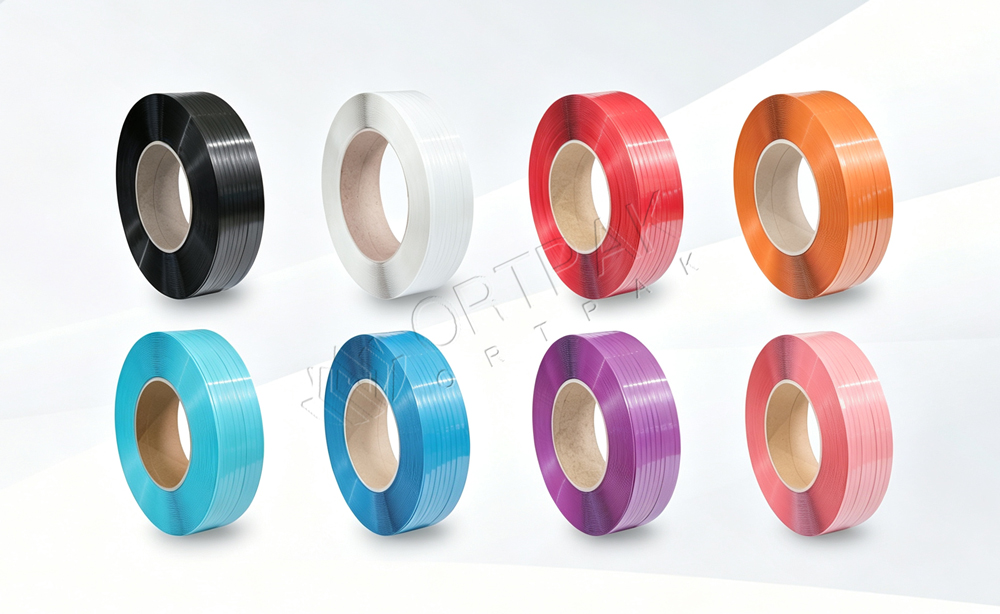
Targeted at harsh working conditions in brick plants, PET plastic‑steel straps combine strength, stability, safety and cost‑effectiveness, solving drawbacks of traditional strapping and serving as an upgraded alternative for heavy‑duty bundling in brick plants.
High Strength & Creep Resistance for Long‑term Stable Stack Binding
PET strapping deliver mechanical properties close to steel straps, with tensile strength far exceeding ordinary PP straps. Their standout merit lies in excellent creep resistance. Tension can be stably maintained for a long time after tightening. During weeks‑to‑months outdoor stacking, repeated loading‑unloading and cross‑province long‑haul transportation, they resist slackness and breakage, fundamentally eliminating stack collapse and loose bundles. Brick breakage losses are greatly reduced to guarantee intact finished‑product delivery.
Weather & Corrosion Resistance for Complex Working Conditions
They resist erosion from cement dust and humid vapor in brick plants, featuring moisture‑proof and rust‑free performance without corroding brick surfaces. UV‑resistant black variants maintain stable performance within a wide temperature range of ‑50℃ to 100℃ under prolonged outdoor sun and rain, resisting day‑night and seasonal temperature changes. Applicable to steam‑curing workshops, open‑air stockyards and other scenarios, they completely avoid finished‑product contamination caused by rusted steel straps.
Flexible Cushioning for Brick Protection & Safe Operation
Unlike rigid bundling by steel straps, PET straps have a reasonable elongation rate. They effectively buffer impact forces generated by bumpy transportation and forklift handling, reducing brick corner chipping, cracking and damage. Meanwhile, strap edges are smooth and burr‑free with no spring‑back risk upon cutting. Safety hazards such as hand cuts and spring‑back injuries from steel straps are eliminated, significantly improving standardized workshop operation safety.
Superior Cost‑performance for Comprehensive Cost Reduction
For equivalent bundling strength, PET strapping cut comprehensive costs by more than 40 % compared with steel straps. Their self‑weight is merely 1/6 of steel straps. Longer roll lengths improve consumable utilization and reduce roll‑changing frequency. Recyclable and eco‑friendly, they avoid material waste. Meanwhile, implicit expenditures such as brick rework due to damage, after‑sales compensation and safety‑accident losses are lowered. Long‑term application enables brick plants to realize remarkable cost reduction and efficiency improvement.
High Equipment Compatibility for Automated Production
Flexible and regular straps feed smoothly with low risks of jamming, breaking and slipping. They are fully compatible with full‑automatic strapping production lines as well as hand‑held electric / pneumatic strapping machines in brick plants. Both palletized and pallet‑free stacking‑strapping modes are supported. Covering red bricks, perforated bricks, cement bricks, permeable bricks, aerated blocks and other brick types, they fit production rhythms of small‑, medium‑ and large‑scale brick plants and boost outbound strapping efficiency.
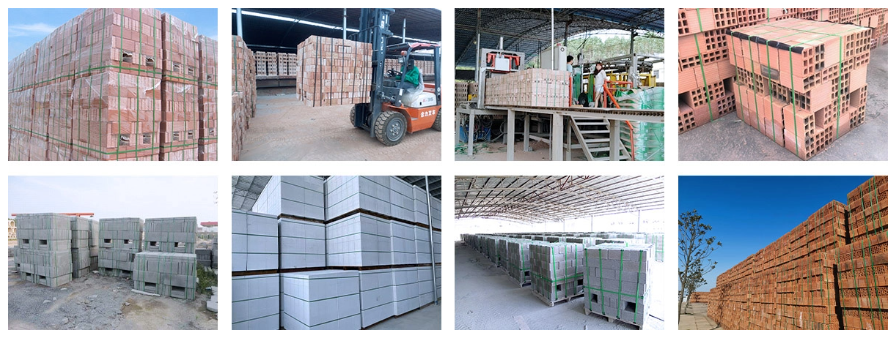
Select standard specifications according to brick‑stack weight, stacking scenarios and transportation distances to prevent over‑specification or insufficient strength. Prioritize 100%‑virgin‑material strapping for all working conditions; avoid products mixed with recycled materials to guarantee stable tension and anti‑fracture performance against aging.
Light‑weight brick stacks (1‑1.5 tons): For standard bricks and perforated bricks. Recommended mainstream specifications: 1608, 1610. Compatible with various hand‑held electric strapping machines for regular warehousing and short‑haul transportation with optimal cost‑performance.
Heavy‑weight brick stacks (1.5‑2.5 tons): For cement bricks, permeable bricks and heavy‑duty blocks. Recommended heavy‑load reinforced specifications: 1910, 1912. Enhanced anti‑cutting and tensile performance resists heavy‑load compression and abrasion from sharp brick corners, suitable for long‑distance logistics transportation.
Long‑term outdoor stacking scenarios: Prioritize UV‑resistant black PET strapping formulated with special anti‑UV additives to slow down outdoor aging, brittleness and slackness for open‑air stockyard long‑term storage.
Bricks shall be stacked flat, aligned and orderly without suspension at the bottom. Standard forklift pockets shall be reserved to prevent forklift‑caused stack collapse. For pallet‑free stacking, ensure square and stable stacks; minimize local protrusions and sharp corners to reduce cutting‑caused strap losses.
Straps shall be no less than 5 cm away from brick‑stack edges to avoid crushing brick corners. For heavy‑load stacks, adopt cross‑shaped or grid‑shaped bundling; keep strap spacing within 30 cm. Add vertical reinforcing straps for extra‑high stacks. Reasonably adjust strapping‑machine tension to balance bundling tightness and brick integrity — excessive tension crushes bricks while insufficient tension causes slipping and slackness. Ensure full and firm hot‑melt joints without offset or incomplete fusion.
Install paper corner protectors at sharp brick‑corner positions subject to frequent strap abrasion to reduce strap cutting and breakage. Strapping‑band rolls shall be stored in cool and dry places. Avoid prolonged outdoor sun exposure and water immersion. Stack roll height shall not exceed 1.5 meters. Cover idle rolls timely to prevent premature aging and failure.
Strap slackness and slipping after strapping
Causes: Insufficient tension setting, overly‑smooth strap surface or inadequate hot‑melt fusion.
Solutions: Appropriately increase equipment tension; clean dirt on hot‑melt modules. For heavy‑load scenarios, adopt embossed PET straps to enhance friction and joint firmness.
Straps cut off by brick corners
Causes: Irregular stacking, protruding sharp corners or undersized strap thickness.
Solutions: Optimize stacking procedures and align brick corners; add corner protectors; upgrade to thicker‑specification straps for heavy‑load conditions.
Strap breakage and aging after outdoor storage
Causes: Inferior recycled‑material straps without anti‑UV formulation.
Solutions: Replace with virgin‑material UV‑resistant special‑purpose PET strapping. Provide sun‑shading and rain‑sheltering protection for finished brick stacks to extend bundling service life.
For brick plants, strapping consumables represent a key detail for quality improvement and cost reduction. Featuring high strength against stack collapse, rust‑free weather resistance, low‑loss brick‑protection performance, safety, low cost and automation compatibility, PET plastic‑steel strapping serve as a perfect substitute for traditional steel straps and PP straps and adapt to diverse harsh working conditions in brick plants. Proper selection of special‑purpose strapping not only lowers product‑damage risks and safety hazards but also continuously cuts operating costs. It constitutes an essential upgrade for modern brick‑plant enterprises to optimize production workflows and strengthen market competitiveness.
Suzhou Qingxing Packaging specializes in R&D and manufacturing of high‑performance PET strapping. With 15‑years of experience in the packaging industry, we focus on heavy‑duty bundling scenarios such as brick plants and are well‑acquainted with pain points across brick‑plant production, warehousing and transportation workflows. All our products are made of 100% virgin raw materials without recycled‑material adulteration. Rigorous production processes and full‑range quality testing guarantee balanced and stable tensile strength and superior anti‑aging performance for every roll. Our straps resist breakage and slackness during long‑term use and fit semi‑automatic and full‑automatic strapping equipment in brick plants of all sizes. We can customize strapping‑band specifications for customers according to brick types, stack weights, warehousing conditions and long‑distance transportation requirements, delivering one‑stop bundling cost‑reduction solutions. Comprehensive support covering product matching, on‑site commissioning and after‑sales technical guidance empowers brick‑plant customers to achieve quality and efficiency improvement.


